
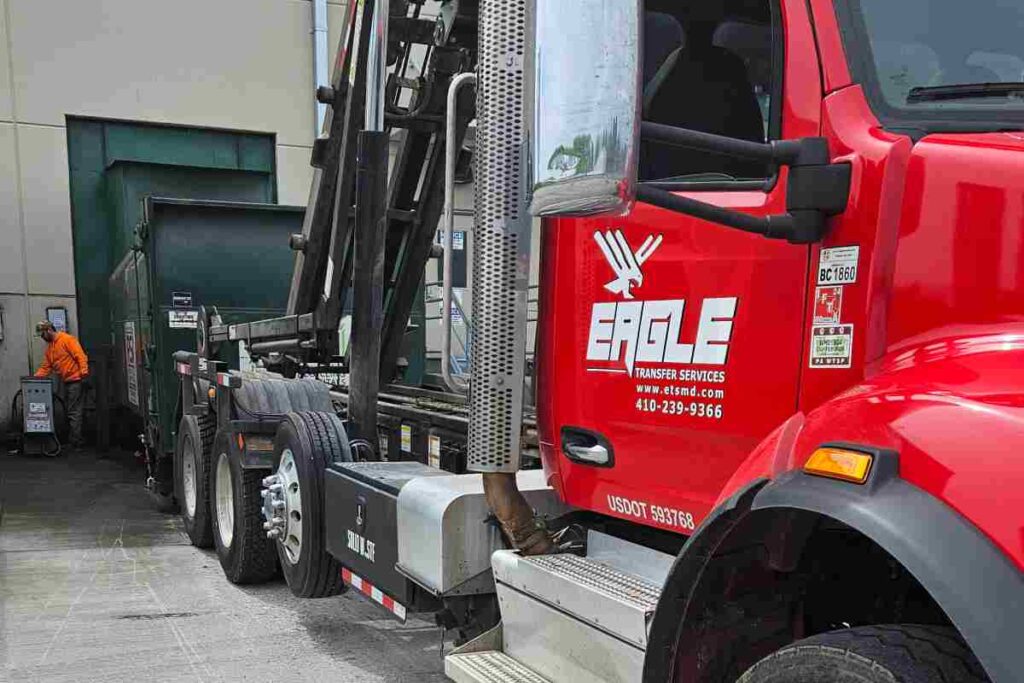
Hazardous waste doesn’t sit still, and neither do the rules around it. Whether your business generates chemical byproducts, used solvents, or other regulated materials, one of the first questions you’ll have to address is how often to arrange removal. Get it right, and you stay safe, legal, and efficient. If you make a mistake, you could be looking at fines, legal liability, and possible harm to your employees and the community.
If you’re trying to figure out the right hazardous waste pickup frequency for your business, the answer depends on a few key factors: how much waste you generate, what kind of materials you’re handling, and what federal and Maryland regulations require of your facility. Here’s how to work through those variables and build a removal schedule that holds up under inspection.
What Determines How Often You Need a Pickup?
Hazardous waste pickup varies from business to business with the frequency depending on several variables specific to your facility.
- Volume of waste generated. The more waste your operation produces each month, the more often you’ll need scheduled service. A large manufacturing plant and a small auto repair shop have very different output levels and very different removal needs.
- Type of materials. Certain waste types, especially acutely hazardous materials, are subject to stricter limits on on-site storage. The specific materials your business handles will directly shape your disposal schedule.
- Storage capacity. Even if your monthly output is moderate, limited on-site storage can force more frequent pickups. Once you hit your storage threshold, the waste has to move.
- Regulatory category. Under federal law, your generator category determines your storage time limits. Knowing where you fall is the foundation of your entire hazardous waste disposal schedule.
The Generator Categories That Drive Your Schedule
The U.S. Environmental Protection Agency (EPA) classifies businesses into three generator categories based on monthly waste output. These categories set the legal parameters for how long hazardous waste can remain on your property and how much can accumulate at any given time.
According to the EPA’s generator regulations under 40 CFR Part 262:
- Very Small Quantity Generators (VSQGs) generate 100 kilograms (220 pounds) or fewer of hazardous waste each month. They have fewer restrictions but must still make sure waste is sent to an authorized facility.
- Small Quantity Generators (SQGs) produce between 100 and 1,000 kilograms per month and may store waste on-site for up to 180 days, provided on-site accumulation doesn’t exceed 6,000 kilograms.
- Large Quantity Generators (LQGs) produce 1,000 kilograms or more per month and must remove waste within 90 days.
LQGs, which include many manufacturers, auto body shops, and industrial facilities, have a 90-day maximum storage window that effectively requires a regular, structured hazardous waste removal schedule, often monthly or more frequently depending on output volume.
Maryland adds another layer. The Maryland Department of the Environment (MDE) maintains its own classification system under COMAR 26.13, which in some respects is more stringent than federal standards. MDE conducts routine, unannounced inspections of hazardous waste generators and can issue penalties for violations.
Which Industries Need the Most Frequent Pickup?
Some operations produce hazardous waste at a pace that demands consistent, scheduled removal, sometimes weekly. Others can operate on a monthly or on-demand basis. Here’s a general breakdown by industry type:
High-frequency needs (weekly to monthly):
- Manufacturing and industrial facilities
- Healthcare and pharmaceutical operations
- Auto repair, body shops, and fleet maintenance
- Construction and demolition contractors handling regulated materials
Moderate-frequency needs (monthly to quarterly):
- Laboratories and research facilities
- Educational institutions and printing operations
- Dry cleaners and cleaning service companies
Lower-frequency needs (quarterly or on-demand):
- Office-based businesses with occasional chemical waste
- Small retail operations
- Property managers dealing with episodic hazardous materials
The University of Maryland’s hazardous waste management guidelines note that the EPA assigns generators “cradle to grave” responsibility for their hazardous waste from the moment it’s produced. That responsibility doesn’t pause while waste sits in storage.
The Compliance Risks of Getting the Schedule Wrong
Businesses that treat their hazardous waste disposal schedule as an afterthought tend to run into the same problems: storage limits exceeded, documentation gaps, or waste left sitting past its legal accumulation window. The consequences can include significant fines, compliance orders, and civil or criminal liability.
The EPA’s compliance regulations make clear that generators who exceed accumulation time limits or quantity thresholds may be treated as unpermitted treatment, storage, and disposal facilities, which carry a much higher, more costly regulatory burden.
Proper documentation matters too. SQGs and LQGs must use a Uniform Hazardous Waste Manifest for every off-site shipment. In Maryland, MDE has additional manifest requirements beyond the federal baseline, including annual reporting for fully regulated generators.
Building a Hazardous Waste Management Plan
Rather than reacting to a full storage area or an approaching deadline, a more effective approach is to adopt a formal hazardous waste management plan that sets your business’s removal schedule in advance. A solid plan accounts for monthly waste generation rates, storage capacity, container conditions, regulatory categories, accumulation time limits, and seasonal or project-based fluctuations in output.
Matching your business’s hazardous waste removal schedule to your actual output keeps you ahead of compliance requirements and eliminates unnecessary risk.
Partner with Eagle Transfer Services
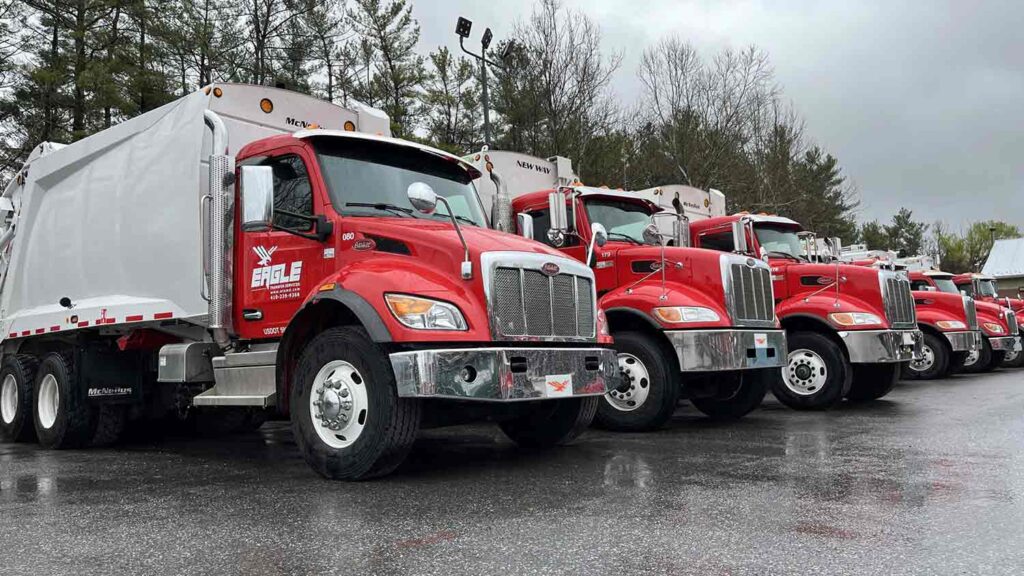
At Eagle Transfer Services, we’ve been helping businesses in Maryland manage their waste responsibly for over 47 years. We understand that compliance involves more than checking a box on a list. The goal is to protect your team, provide smooth operations, and look out for your community.
Whether you need consistent scheduled waste removal services or help figuring out the right hazardous waste pickup frequency for your business, we’re here to work through it with you. We answer the phone. We arrive as promised. We deliver on our commitments.
We serve businesses within 25 miles of Finksburg, Maryland, and throughout the DMV. Contact Eagle Transfer Services online or by phone at (410) 983-3332 to discuss your hazardous waste disposal schedule and find a service plan that keeps your operation running safely and in compliance.
About Us
Since 1979, Eagle Transfer Services has been the Mid-Atlantic's trusted partner for safe, responsible, and efficient waste management. Our commitment to dependable service and environmental responsibility hasn't changed in over 47 years — and it never will.
Learn more →I've been using this company for my business for years. They are always on time and professional. I highly recommend them for all your waste management needs!
These guys are great! They always go above and beyond to make sure my trash is taken care of. I would recommend them to anyone.