
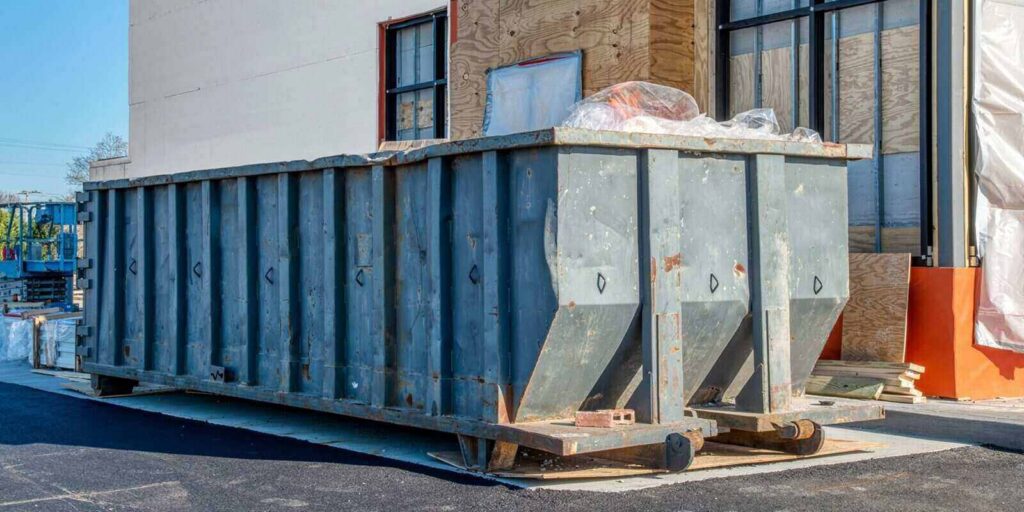

Container size, debris weight, days on site, and the number of hauls determine what a roll-off dumpster adds to a job bid. Contractors who price those items at the walk-through keep overages off their margin after the contract is signed. Estimating dumpster costs that early also lets you show the client clean, itemized numbers.
Size the Container Around the Demo
According to the U.S.Environmental Protection Agency (EPA), demolition generates more than 90% of the country’s construction and demolition debris, while new building projects generate less than 10%. On a kitchen remodel, the crew pulls out cabinets, countertops, flooring, and drywall in the first few days and produces very little waste once installation starts. When you size a roll-off container for job sites with demo work, base it on the demo volume.
Demo crews pull framing out in odd lengths that don’t stack well. Cabinet boxes take up nearly as much room in a container as they did installed. Add that bulk to your volume estimate, especially when the demo extends past a single kitchen or bath.
A hauler may refuse an overfilled container at pickup or charge extra to take it, because crews can’t load debris above the top edge. When your volume estimate lands close to the rim, order the next size up.
Heavy Debris Goes in Smaller Containers
A crew loading concrete or dirt will hit the weight limit long before debris reaches the top edge. Order a 10-yard container for heavy material. That size holds about three to four pickup truck loads. Split larger volumes across separate hauls.
Ask how weight is billed on each size when you request a quote, and price those loads against that answer. Keep heavy debris separate from framing lumber and drywall so you can estimate each category separately. Current sizes and fill guidance are on the roll-off dumpster service page.
Where Disposal Estimates Fall Short
The drop-off and the first haul are the easy numbers to price. Contractors factoring disposal costs into a bid also need to account for the charges a hauler adds once the container is on site.
Debris Weight
USG lists its 5/8-inch fire-rated drywall at about 2.2 pounds per square foot, so a crew stripping 2,000 square feet of ceilings and garage walls loads roughly 4,400 pounds of it into the container. Cabinets and flooring go in on top of that, and every pound counts toward the dumpster cost for contractors when a hauler bills by weight.
Build extra weight into restoration bids, since drywall and carpet pulled from a water-damaged room hold water. Tarp the container between loads when storms are in the forecast.
Days on Site

Bid for the schedule you expect, including the slow weeks. If the job runs long, the hauler can extend the service period and adjust the pickup date, though the extra time may cost more. Ask about extension fees when you request a quote, and price a likely overrun into the bid.
A failed inspection or a material backorder can stall the crew for days or weeks. Add a cushion to the timeline on any job that needs a permit sign-off between phases.
On long builds, you can have the container pulled after demo and order a new one for final cleanup. Compare that cost to weeks of idle time between the first phase and finish work, and bid whichever comes out lower.
Extra Hauls and Placement
Price every swap-out after the first drop as its own haul in the construction debris removal cost. A whole-house gut renovation can fill more than one 30-yard container. Put the second haul in the original bid so the client doesn’t first hear about it as a change order.
When a hauler shows up a day late for a swap-out, your crew stands around with nowhere to put debris. Confirm swap scheduling with the company before you commit to a demo timeline.
If the driver can’t reach the container on pickup day because of a parked car or tight access, the hauler can still charge a trip fee. During the walk-through, choose a drop spot on firm ground with clear overhead space and a straight approach for the truck. With that access, the driver sets and pulls the container without backing around workers or materials.
If the container has to sit in the roadway, look up the local rules during estimating. Baltimore City’s Department of Transportation (DOT), for example, issues a temporary right-of-way permit for dumpsters placed on the street, and surrounding counties set their own requirements. Include the fee and approval lead time in the bid.
Materials That Need Their Own Line Item
Asbestos-containing material, solvents, and other hazardous waste can’t go in a standard construction roll-off. The EPA and the Maryland Department of the Environment (MDE) set separate handling and disposal rules for them.
About three-quarters of U.S. homes built before 1978 still contain some lead-based paint, according to federal estimates. Anyone paid to disturb those painted surfaces must be certified under the EPA’s Renovation, Repair and Painting (RRP) Program. On those homes, build RRP-compliant containment and cleanup time into the bid.
Haulers price hazardous material by type and quantity and document it on separate paperwork. Give it its own allowance in the bid. If the crew opens a wall and finds something unexpected, you won’t have to pull from the general disposal budget.
List Disposal as Its Own Line in the Estimate
Treat disposal the way you treat other contractor job bidding costs, with quantities and assumptions written out. If it sits as a lump sum in general conditions, you’ll have a harder time explaining it when the client questions the number after work starts.
List dumpster costs in a construction estimate by container size, number of hauls, and planned days on site. That way, the client sees exactly what they are paying for.
On older homes and water damage jobs, you can’t judge the demo volume until the walls are open. For that work, carry disposal as an allowance with a stated price per haul. The client agrees to the planned number of containers up front and knows what any additional container will cost.
Tie the disposal line to the scope in writing. If the owner adds a bathroom to the demo or the job runs long for reasons outside your control, bill the additional hauls or days as a change order. You and the client discuss only the added work, and the original disposal price stays as bid.
Plan Your Containers Before the Bid Goes Out
Eagle Transfer Services has set containers on Mid-Atlantic job sites since 1979, and we handle both roll-off service and hazardous waste removal. Call 1-410-983-3332, and a live person on our team will help you match the right size to your debris type while you’re still pricing the work.
Most orders are delivered within 24 to 48 hours, and you can switch to a different container as long as you let us know before delivery. Contact our office to schedule a roll-off dumpster for construction projects anywhere in our service area.
About Us
Since 1979, Eagle Transfer Services has been the Mid-Atlantic's trusted partner for safe, responsible, and efficient waste management. Our commitment to dependable service and environmental responsibility hasn't changed in over 47 years — and it never will.
Learn more →I've been using this company for my business for years. They are always on time and professional. I highly recommend them for all your waste management needs!
These guys are great! They always go above and beyond to make sure my trash is taken care of. I would recommend them to anyone.