
What Businesses and Property Owners Need to Know
A single 55-gallon drum of improperly stored chemicals can contaminate an entire water table. While homeowners drop hazardous materials at municipal sites, commercial businesses can’t use these services. Stricter regulations govern how contractors, manufacturers, and commercial roofers handle toxic substances.
Effective hazardous waste management prevents groundwater contamination, avoids EPA fines, and ensures worker safety. This guide breaks down identification, handling, and disposal requirements for Baltimore-area businesses.
Understanding RCRA Hazardous Waste Classifications
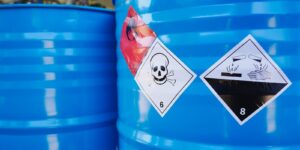
The EPA’s Resource Conservation and Recovery Act defines RCRA hazardous waste as materials threatening human health or the environment.
Four categories exist:
- Ignitable substances that catch fire easily
- Corrosive materials that eat through metal
- Reactive chemicals that explode under pressure
- Toxic compounds that harm living organisms
Here’s where commercial operations hit a wall. Residents drive to weekend collection events, but businesses need licensed professionals. Volume matters too. Commercial sites generate far more waste than households, creating complex disposal challenges.
Non-hazardous solid waste and underground storage tanks also fall under RCRA. However, disposal costs and requirements differ drastically between hazardous and non-hazardous materials.
Common Hazardous Materials in Baltimore Commercial Properties
Walk through any commercial roofing warehouse and you’ll find materials that require special disposal:
- Roofing adhesive and epoxies – Two-part systems designed to withstand decades of weather pack serious chemical punch
- Manufacturing byproducts – Spent solvents, contaminated cleaning agents, and production chemicals that accumulate faster than expected
- Legacy materials – Mystery substances from building renovation with faded labels and forgotten origins
What starts as a few containers can quickly overwhelm storage capacity, especially when nobody remembers what that drum contains.
One myth worth busting: asbestos disposal isn’t automatically hazardous when handled correctly. It’s naturally occurring and disposal follows different rules than synthetic chemicals.
How to Properly Identify and Assess Hazardous Materials
Getting started means counting everything. Every container, every partially used product, every “might be hazardous” substance gets logged with quantities and descriptions. Product labels tell most of the story, but time and weather fade important details.
Mystery substances need lab work. Testing determines what you’re dealing with and where it can go for disposal. Some materials travel hundreds of miles to specialized facilities, while others get processed locally.
Paperwork makes or breaks compliance. The EPA requires an identification number for your business, along with detailed manifests that track materials from your door to final disposal. Every container, every pound, every mile gets documented.
Most business owners find this administrative task overwhelming. Strategic companies let waste management professionals handle the paperwork maze while maintaining legal responsibility for their materials.
Costly Mistakes Commercial Properties Make
Tossing hazardous materials into regular dumpsters creates massive problems. Four expensive mistakes show up repeatedly across Baltimore commercial properties:
- Indefinite storage: Drums sit in corners for years, slowly deteriorating while content potentially leak into soil and groundwater.
- Regular dumpster disposal: Entire loads get rejected at landfills, contaminating tons of waste and triggering hefty fines.
- Procrastination: Disposal fees climb yearly while stored materials degrade and volumes grow beyond reasonable handling.
- DIY attempts: Businesses create safety incidents, regulatory violations, and cleanup costs that far exceed professional services.
Environmental cleanup costs dwarf disposal fees every time, making these mistakes particularly expensive.
5 Steps to Professional Hazardous Waste Disposal
Step 1: Get a Professional Assessment: Free evaluations separate actual hazardous waste from materials that don’t need special handling. Many substances businesses worry about can go through standard disposal channels, saving significant money.
Step 2: Identify Everything Properly: Lab testing reveals what mystery substances actually contain. Results determine where materials can go and what safety precautions apply during handling and transport.
Step 3: Package According to Regulations: Each material type has specific packaging requirements. Containers, labels, and safety measures must meet transportation standards before pickup.
Step 4: Schedule Coordinated Pickup: Professional teams work around business operations, to safely remove materials while maintaining detailed chain-of-custody documentation.
Step 5: Verify Final Disposal: Materials reach certified facilities designed for specific waste types. Documentation confirms compliant disposal and provides legal protection for generators.
Managing Disposal Costs and Budgeting
Two factors drive most disposal expenses: trucking and processing. Materials often travel hundreds of miles to specialized facilities, making transportation a major cost component. Processing fees vary based on waste type and treatment requirements.
Monthly pickup schedules help businesses budget for ongoing waste generation. Regular service costs less per pound than emergency calls, and consolidated loads reduce transportation expenses. Emergency response carries premium pricing; spills and urgent removals cost significantly more than planned pickups.
Cost-saving strategies include:
- Accurate identification: Avoiding unnecessary hazardous classification saves substantial disposal fees.
- Proper storage: Preventing contamination keeps materials in their original disposal category.
- Timely action: Acting before volumes become unmanageable reduces transportation costs.
Thoughtful planning saves your company money.
Get Professional Help for Hazardous Waste Disposal
Hazardous waste regulations change faster than most business owners can track. EPA identification numbers, manifest requirements, transportation rules, and disposal facility certifications create a regulatory maze that can trip up even experienced operators.
The administrative burden alone justifies calling professionals. From initial assessment through final disposal documentation, specialists like Eagle Transfer handle the complex requirements while business owners focus on their core operations.
Disposal costs keep climbing year after year. Materials sitting in storage cost more to dispose of over time. Containers deteriorate, regulations tighten, and facility fees increase.
Don’t let hazardous materials pile up around your property.
Contact Eagle Transfer Services for a free assessment. Since 1979, we’ve helped Baltimore-area businesses stay compliant while protecting their properties and communities.
About Us
Since 1979, Eagle Transfer Services has been the Mid-Atlantic's trusted partner for safe, responsible, and efficient waste management. Our commitment to dependable service and environmental responsibility hasn't changed in over 47 years — and it never will.
Learn more →I've been using this company for my business for years. They are always on time and professional. I highly recommend them for all your waste management needs!
These guys are great! They always go above and beyond to make sure my trash is taken care of. I would recommend them to anyone.