
When food scraps and biosolids get sent to landfills, they decompose and release methane, a greenhouse gas more harmful than carbon dioxide. That’s a problem for the planet and costly for your business.
Whether you’re in food production, agriculture, hospitality, or manufacturing, how you manage your organic waste can impact your bottom line, your regulatory compliance, and your sustainability goals.
At Eagle Transfer Services (ETS), we help Baltimore-area businesses rethink organic waste management by assessing current practices. In this guide, we’ll answer key questions about:
- What qualifies as organic industrial waste
- Which businesses produce it
- How to choose the best disposal methods, like composting or anaerobic digestion
- How to launch a cost-effective, compliant waste program
If you’re ready to reduce waste, cut costs, and stay ahead of environmental regulations, let’s dig in.
Who Produces Organic Waste?
If your business handles food, crops, textiles, or water treatment, it probably produces a large amount of organic waste.
Common business sectors include:
- Food processing facilities and distribution warehouses
- Restaurants and hospitality venues
- Grocery stores and supermarkets
- Farms and agricultural operations
- Manufacturing plants
- Wastewater treatment plants
What Is Organic Industrial Waste?
Industrial and commercial businesses produce organic industrial waste every day. Unlike plastics or metals, it can be composted or treated for reuse.
Typical examples include:
- Byproducts from food processing
- Crop and animal waste from farms
- Textile and paper mill scraps
- Biosolids and organic matter from wastewater treatment
Once identified and sorted correctly, these materials can be diverted from landfills and repurposed.
Types of Organic Industrial Waste by Industry
Different industries generate different forms of organic waste, and each has unique challenges and opportunities when it comes to disposal. Here’s how waste breaks down in each sector, and what your business can do about it.
Food Processing Facilities and Distribution Warehouses
Food processors generate large volumes of organic waste from:
- Spoiled or expired inventory
- Fruit and vegetable trimmings
- Cleaning byproducts and wash water solids
- Contaminated packaging or mislabeled goods
Much of this is ideal for composting or anaerobic digestion, which turns waste into renewable energy.
Agricultural Operations
Farms and agribusinesses regularly handle organic byproducts such as:
- Crop residues (husks, stalks, plant trimmings)
- Livestock manure and bedding
- Spoiled feed and silage
When properly composted, this waste can be repurposed into fertilizers or soil conditioners, closing the loop on your land.
Manufacturing Plants
Facilities working with organic raw materials produce:
- Paper mill sludge
- Fabric remnants, fiber scraps
- Wood shavings, bark, and sawdust
With accurate sorting and treatment, much of this material can be recycled, composted, or even used in biomass energy systems.
Wastewater Treatment Plants
These facilities create organic byproducts such as:
- Biosolids (treated sewage sludge)
- Organic-rich sludge
- Nutrient-rich waste
When handled carefully, these can be turned into soil amendments or processed for energy recovery.
For more information about how ETS’ commercial services support your organic waste management program, visit our industrial and manufacturing waste page.
Which Organic Waste Disposal Method is Right for Your Business?
Not all waste is created equal. And not all disposal methods deliver the same value. Here’s how the top solutions stack up and when to use each one.
Composting
Composting turns waste into profit. Microorganisms break down organic waste and turn it into nutrient-rich material. This lowers costs and helps meet sustainability goals. It can also turn a profit through the resale or reuse of the composted material.
Anaerobic Digestion: Power Up With Waste
This method uses bacteria to break down waste without oxygen, producing biogas (a renewable energy source) and digestate (a fertilizer product).
Great for:
- Food waste
- Farm waste
- Biosolids from wastewater plants
Dumpster Services: Easy and Reliable
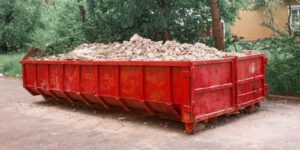
For businesses without on-site composting, specialized dumpster rental services like those from Eagle Transfer Services offer:
- Contamination-resistant containers
- Scheduled pickups
- Proper sorting and separation
Landfilling
Sending organic waste to the landfill should be the last resort, as it is the least sustainable option.
Reasons to avoid it:
- Releases a high amount of methane
- Wastes recoverable materials
- Adds hauling and tipping expenses (up to 75%)
To help you better understand your greenhouse gas emissions, the EPA developed the Greenhouse Gas Equivalencies Calculator, which simplifies the results of their Waste Reduction Model (WARM). Working together, these tools help you build a strategy for limiting emissions.
Launching Your Organic Waste Program
Starting an organic waste program requires a structured approach. You can be successful if you follow these steps:
- Conduct a waste assessment to understand how much waste you’re producing and where it’s coming from.
- Train your team how to sort and handle waste correctly. Use clear signage and simple instructions.
- Select composting, anaerobic digestion, or another strategy that matches the material you’re removing.
- Look for a provider, like ETS, that has experience handling organic waste in your industry.
- Track results–amount of waste diverted, cost saved, emissions reduced– to improve impact and ROI.
At Eagle Transfer Services, we help businesses of all sizes build sustainable waste solutions. Whether you need specialized dumpsters, a custom treatment strategy, or a complete waste audit, ETS has you covered.
Need help improving your organic waste management? Request a quote or schedule a waste audit today.
About Us
Since 1979, Eagle Transfer Services has been the Mid-Atlantic's trusted partner for safe, responsible, and efficient waste management. Our commitment to dependable service and environmental responsibility hasn't changed in over 47 years — and it never will.
Learn more →I've been using this company for my business for years. They are always on time and professional. I highly recommend them for all your waste management needs!
These guys are great! They always go above and beyond to make sure my trash is taken care of. I would recommend them to anyone.