

A business that operates without a formal waste plan usually finds out the hard way that it needs one, often at the worst possible time. Overflowing dumpsters, missed pickups, and last-minute calls to find a hauler who can handle hazardous material point to the same problem: no system in place. A solid commercial waste management plan addresses that by outlining how waste is sorted, stored, picked up, and disposed of on a schedule that aligns with how the business operates.
Working alongside a suitable commercial waste management services partner simplifies the entire process significantly right from the start. This article breaks down the steps for building a commercial waste management plan, including assessing waste volume, selecting containers, setting a pickup schedule, and meeting local disposal requirements.
Start With a Waste Volume Assessment
Before ordering a single container, a business needs to know what it is actually throwing away and how much of it there is. A waste volume assessment involves a few weeks of tracking: what materials are generated, how full containers get between pickups, and which areas produce the most.
Retail locations, restaurants, contractors, and office buildings generate different volumes and types of waste, so a generic estimate rarely holds up for business waste disposal planning. The EPA’s guide for commercial buildings recommends a waste audit as the starting point, since it identifies the makeup of the waste stream before decisions are made about equipment or service levels.
Choose the Right Containers for Your Facility
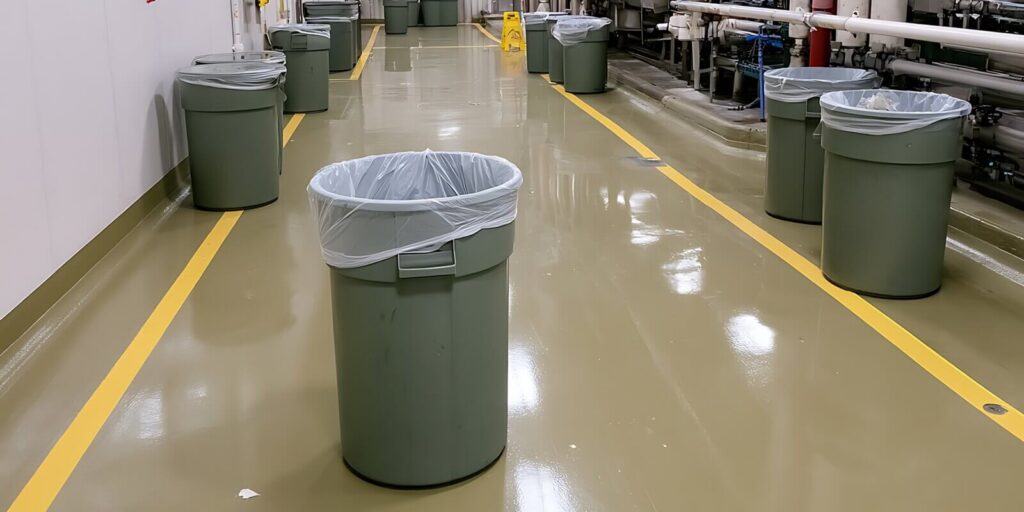
Once a business has a handle on its waste volume, the next step in waste disposal planning is to match container size and type to the facility. A commercial container selection guide considers:
- Square footage and daily foot traffic
- Type of waste generated (general trash, recyclables, construction debris, organic waste)
- Available space for container placement
- Frequency of service needed to avoid overflow
Undersized containers lead to spillover and complaints. Oversized containers waste money and take up space needed for parking or operations. A facility manager comparing commercial waste management solutions should expect a hauler to walk the site and recommend container types based on actual conditions, not a default size.
Set a Pickup Schedule That Actually Works
Business waste pickup scheduling is where many plans fall apart after the first few weeks. A schedule that looks fine during the slow season can leave containers overflowing once volume increases, and one built around peak season can mean paying for pickups that aren’t needed the rest of the year.
The better approach is to build flexibility into the plan from the start. Seasonal businesses, construction sites with shifting timelines, and retailers with holiday spikes all benefit from a service agreement that can adjust pickup frequency without a lengthy renegotiation. This is where a hands-on commercial waste management services provider earns its keep; a business that can get a route adjusted in a day or two avoids a container sitting full for a week.
Meet Local and Regulatory Disposal Requirements
Compliance is not optional, and rules vary by location and waste type. Facility waste management compliance means knowing which materials need special handling, particularly hazardous waste from manufacturing, cleaning, automotive, or industrial work.
The EPA’s guide for small businesses covers federal requirements for hazardous waste generators, including how materials must be stored, tracked, and shipped off-site. Maryland adds a layer of local waste disposal requirements, since the Maryland Department of the Environment requires that hazardous waste shipped off-site be handled by a certified hauler with a manifest tracking it to final disposal. A plan built around these requirements keeps a business audit-ready year-round.
Building a Plan That Scales with Your Business
A commercial waste management plan should hold up as a business changes, not just fit the operation today. It’s worth revisiting each year:
- Has waste volume changed enough to justify a different container size or pickup frequency?
- Are new materials being generated that need separate handling?
- Has the business added locations or square footage that change how waste moves through the facility?

Businesses that conduct this kind of yearly review rarely get caught off guard by compliance issues or service gaps. Customized commercial waste solutions, built around real conditions rather than a rigid contract, are what keep a plan useful as the business grows.
Getting started is surprisingly simple and typically involves a waste assessment, a conversation with a competent provider of commercial waste management services, and a schedule built around how the facility actually runs.
Eagle Transfer Services Is Ready to Help
We’ve spent 46 years building Eagle Transfer Services around one idea: show up, do the job right, and treat customers like people, not accounts. When a business in Maryland calls about setting up or improving a commercial waste management plan, our team walks the site and designs commercial waste management services customized to the operation, not a generic package.
If your business needs a commercial waste management plan that holds up under real conditions, contact Eagle Transfer Services online or call (410) 983-3332.
About Us
Since 1979, Eagle Transfer Services has been the Mid-Atlantic's trusted partner for safe, responsible, and efficient waste management. Our commitment to dependable service and environmental responsibility hasn't changed in over 47 years — and it never will.
Learn more →I've been using this company for my business for years. They are always on time and professional. I highly recommend them for all your waste management needs!
These guys are great! They always go above and beyond to make sure my trash is taken care of. I would recommend them to anyone.