
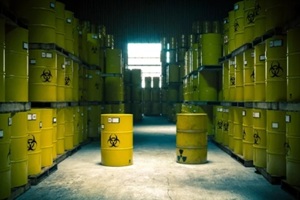
Most warehouses have a shelf, cabinet, or back room where used batteries, aerosol cans, leftover cleaning chemicals, and other hazardous waste collect between disposal runs.
Identifying hazardous waste in a warehouse starts with knowing that federal law classifies several of these ordinary items as regulated material the moment they’re discarded.
What Counts as Hazardous Waste in a Warehouse Setting
The Resource Conservation and Recovery Act (RCRA) sets the federal framework for regulated waste, and the Environmental Protection Agency (EPA) enforces it. Under RCRA, hazardous waste is defined by four characteristics: ignitability, corrosivity, reactivity, or toxicity.
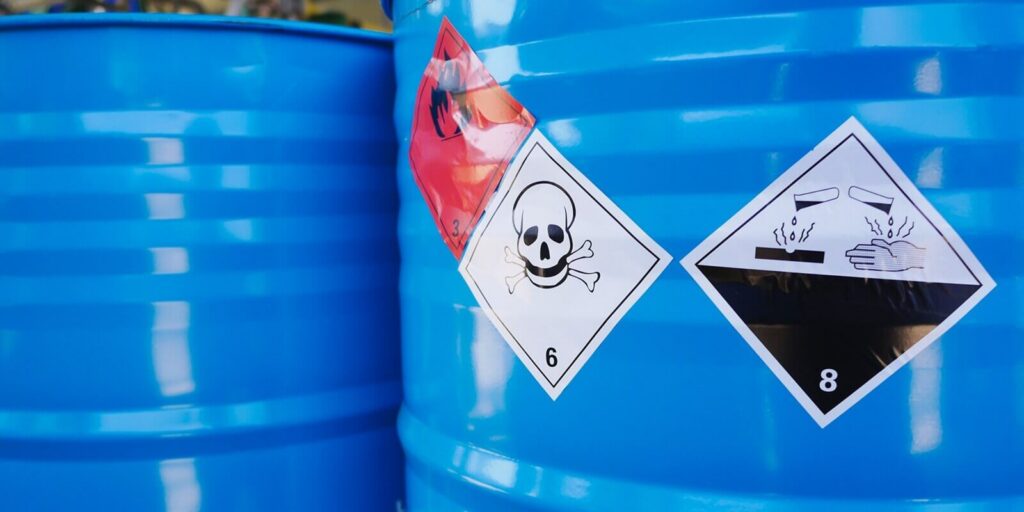
A load earns the ignitability tag if it catches fire at a low temperature, common in paint thinners and aerosol propellants. Corrosivity kicks in when a liquid is strong enough to chew through a steel drum or blister skin, common in industrial-grade degreasers. Reactivity covers materials unstable enough to detonate or release dangerous vapor when disturbed. Toxicity is the catch-all for materials that can poison groundwater once discarded, where spent solvent usually lands.
A warehouse does not have to be a chemical plant to trigger the hazardous waste tag. Its maintenance bay and mop closet are enough.
7 Warehouse Items That Trigger Hazardous Waste Rules
These seven categories turn up on loading docks and supply shelves across Maryland and the Mid-Atlantic often enough to know by name. Get the disposal wrong on any one, and a routine cleanout can quickly turn into a paperwork problem.
Corrosive and Reactive Cleaning Chemicals
Rust removers, some floor strippers, and heavy-duty degreasers are often strong enough to qualify as corrosive once used up, since it doesn’t take much to blister skin or chew through the container they came in. Whatever’s left once a product is marked for disposal counts as regulated waste, no matter how small the amount. Facilities that switch cleaning vendors often inherit a shelf of half-used bottles, which carry the same handling requirements as anything bought for industrial use.
Used Batteries
Forklift batteries, backup power banks, and rechargeable cells from handheld tools all land in EPA’s universal waste program once pulled from service. That status exists because everyday hazardous items such as batteries show up in nearly every facility, so EPA built lighter storage rules around them instead of routing every generator through the full hazardous waste process. That leniency doesn’t cover a cracked or leaking battery, which adds spill risk on top of the paperwork, so intact storage matters more here than almost anywhere else on this list.
Aerosol Cans
A can of spray lubricant or leftover paint doesn’t stop being regulated once most of the contents are gone. EPA folded aerosol cans into the universal waste category in 2019, easing some paperwork, but the underlying rule hasn’t changed. A can that still holds propellant or hazardous residue can’t go out with the regular trash. Maintenance shops and paint booths move through these quickly, and cans awaiting pickup must stay upright, sealed, and away from anything that could puncture them.
Solvents and Paint Thinners
Mineral spirits, acetone, and other solvents used at a parts-cleaning station burn easily enough to earn the ignitable label, and many carry toxic contaminants once spent. A five-gallon bucket of used solvent looks no different from ordinary shop runoff, yet it’s held to the same legal standard as production-line waste. Shops that recycle solvent through a still need a paper trail for whatever residue doesn’t come back out clean.
Fluorescent Lighting and Mercury-Containing Bulbs
Old fluorescent tubes and high-output lamps used in warehouse ceilings contain enough mercury to end up in the same universal waste bucket as batteries and aerosol cans. A relamping project across an entire facility can leave a warehouse with more spent bulbs than expected. That volume needs a documented collection process, not a cardboard box shoved in with general debris.
Used Oil and Hydraulic Fluid
Forklifts, compressors, and loading dock equipment all go through oil or hydraulic fluid that eventually needs draining and replacing. Used oil is managed under its own separate federal standards, which works fine until it gets mixed with solvents and tips into full hazardous waste status. Facilities maintaining their own equipment need a container set aside and labeled for used oil, not whatever drum happens to be open.
Chemical-Saturated Rags and Absorbents
A shop rag soaked in solvent, oil, or degreaser carries the same hazardous traits as the liquid it absorbed, no matter how dry it looks on a bench. A loose pile of rags in a corner or an open bin near a workstation is easy for an inspector to catch, since it sits in plain sight and rarely gets logged. Facilities running parts-cleaning stations need a closed, labeled container for saturated rags, kept apart from the regular shop trash.
Why Misclassifying These Materials Creates Liability
Getting hazardous waste wrong at the workplace level often creates one of three problems for a warehouse: misclassification, improper storage, or delayed disposal.
- Misclassification happens when a facility treats something as ordinary trash because it looks the part. A saturated rag or a nearly empty cleaner bottle can still meet the legal definition of hazardous waste no matter how harmless it looks, and the facility stays on the hook for where it ends up, cleanup costs included if it contaminates soil or a waterway.
- Improper storage turns a paperwork issue into an actual safety incident. A cracked battery case, an uncapped solvent container, or a bin of saturated rags near a heat source is exactly what an inspector notices first on a walk-through. OSHA and EPA both weigh in on storage conditions, and a facility can end up answering to either agency.
- Delayed disposal is a risk that compounds the longer material sits. Both hazardous and universal waste come with accumulation time limits, and a facility that lets containers stack up past those limits forfeits the streamlined handling it would otherwise qualify for.
How Commercial Waste Management Services Keep Warehouses Compliant
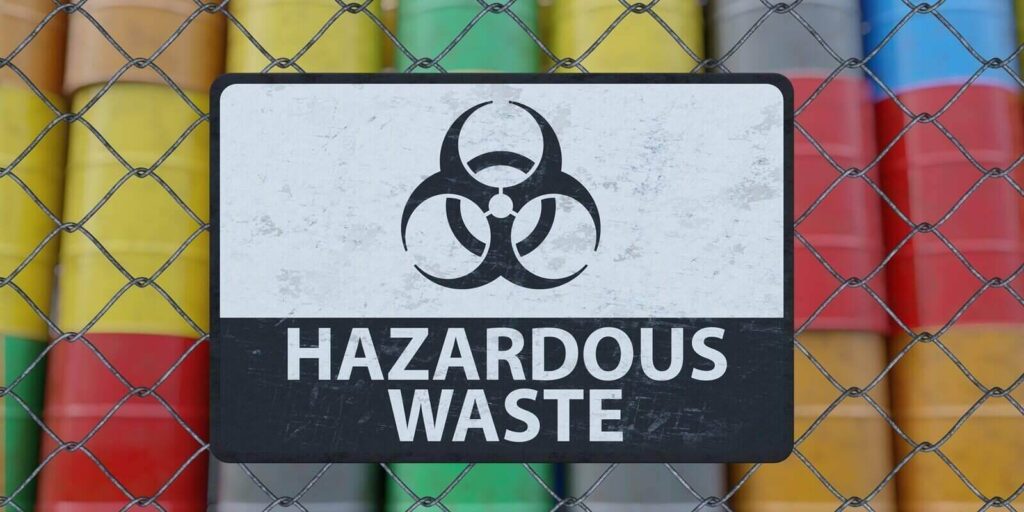
Most compliant facilities have one thing in common, which is a waste partner who identifies regulated material before it becomes a problem. That kind of handling, built around a facility’s actual waste streams rather than a one-size pickup schedule, catches these categories early. It also means training staff to tell universal waste apart from the fully regulated kind, and running a pickup schedule that never lets containers sit past their accumulation limit. A documented commercial waste management plan puts that structure on paper.
Storage rules differ between universal waste (including batteries and lamps) and fully regulated hazardous waste such as reactive cleaning chemicals, so knowing which categories a facility generates matters. A commercial waste management services partner who already works in Maryland, Pennsylvania, and the DC/DMV region can help sort that out before an audit does.
Eagle Transfer Services Handles Warehouse Hazardous Waste Across the Region
Eagle Transfer Services already works with warehouses and industrial facilities across Maryland, Pennsylvania, and the DC/DMV region, handling batteries, solvents, aerosol cans, and other regulated materials from everyday operations.
An operation that wants a second set of eyes on what’s sitting in storage can reach the ETS team at 1-410-983-3332 and talk to a live person.
About Us
Since 1979, Eagle Transfer Services has been the Mid-Atlantic's trusted partner for safe, responsible, and efficient waste management. Our commitment to dependable service and environmental responsibility hasn't changed in over 47 years — and it never will.
Learn more →I've been using this company for my business for years. They are always on time and professional. I highly recommend them for all your waste management needs!
These guys are great! They always go above and beyond to make sure my trash is taken care of. I would recommend them to anyone.