



Ordering the wrong container size on a renovation or demolition project usually costs more than getting the estimate right the first time. Estimating construction debris volume correctly before work starts keeps a project on budget and the crew from waiting on a second haul mid-job.
Container Sizing Starts With Project Scope
Construction debris removal begins with square footage, not guesswork. A contractor gutting a single bathroom generates a different volume than one demolishing an entire kitchen. Measuring the square footage of the space under renovation, then factoring in ceiling height for a full demolition, gives a more accurate construction debris container size.
Homeowners planning a project on their own often underestimate how much construction debris they will have because they picture the finished pile, not the debris as it’s generated. Drywall sheets stack flat and tight on a truck, but once torn out they shatter into bulky, irregular chunks that eat up far more room inside a container. A bathroom remodel might look like a 10-yard job on paper, but add the tile, tub, and vanity to the drywall pile, and most projects end up needing the extra room a 15-yard container provides.
Material Weight Changes the Math More Than Volume Alone
Two projects with matching square footage can need two different container sizes once weight enters the equation. Every roll-off container carries a weight cap tied to its size, and dense material can hit that cap quickly. Skipping material density when calculating debris volume is the single biggest reason contractors get billed for a container they assumed would do the job.
Light, Bulky Debris
Drywall, insulation, and packaging material take up significant space without adding much weight. A container full of drywall scraps from a gut renovation can look nearly full while staying well under its weight limit, so volume drives the sizing decision on this type of job.
Dense, Heavy Material
Concrete, brick, tile, and roofing shingles flip that equation entirely. Order a 10-yard container for a kitchen demolition and skip separating the tile and concrete backer board from the lighter debris, and you can reach the weight limit even if the container is only half full.
Part of the reason for weight limits pertains to safety. A driver who finds a container loaded past capacity won’t risk hauling it and will flag the load for a second pickup instead. Ordering by cubic yardage alone, without factoring in material density, leaves a contractor covering the cost of that second haul.
Translating Project Scope Into Roll-Off Container Sizing
Choosing the right container size for construction debris depends on three factors, which include project type, material mix, and hauling timeline.
- Project type sets the baseline for a construction waste volume estimate. A single-room renovation produces a different volume per square foot than a full interior gut. A structural demolition is exponentially greater in debris volume. Contractors who have handled enough jobs in a given category can estimate closely once the scope is defined.
- Material mix determines whether volume or weight hits the limit first when comparing debris weight versus volume. Projects heavy in drywall, insulation, or packaging lean toward volume-driven sizing. Teardowns heavy in concrete, roofing material, masonry, or asphalt lean toward weight-driven sizing, and combining the two in one container can skew estimates.
- Timeline affects whether one container handles the whole project or whether staged pickups make more sense. You can haul debris from a multi-week demolition in phases. Scheduling a swap partway through the job is often cheaper than paying for one oversized container that sits mostly empty during the first two weeks.
Running Short Mid-Project Has a Real Cost
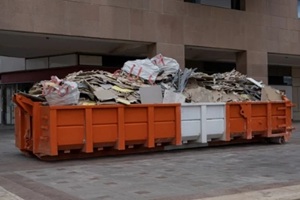
A container that fills before the debris is cleared triggers one of two costs. It can either prompt an overage charge for exceeding the weight limit or a delivery fee for a follow-up container. The overage charge is billed per ton once the load crosses a certified scale at the disposal facility, so you may not know the total cost until after pickup.
Ordering a container too large for renovation debris removal costs less. But a roll-off dumpster sized well above what a project needs is still a cost, and the rate difference between a mid-size and large container adds up on a project working against a fixed budget. The team breakdown on the difference between roll-off and front-load containers covers a related sizing question worth reviewing before ordering.
Working through project scope, material mix, and timeline before a container gets scheduled, whether for a single residential renovation or a larger commercial buildout, is what keeps an estimate accurate instead of guessed. That conversation, done before delivery, carries the same care into the pickup itself and keeps a project moving instead of stalled on a second haul.
Call Eagle Transfer Services Before Ordering a Container
A short conversation about project scope, material type, and timeline resolves most sizing questions before a container arrives on-site. Eagle Transfer Services answers the phone with a live person who can walk through those details and recommend the right container for a specific renovation, demolition, commercial, or industrial project across Maryland, Pennsylvania, and the DC/DMV region. Call 1-410-983-3332 to get a size recommendation before the debris starts piling up.
About Us
Since 1979, Eagle Transfer Services has been the Mid-Atlantic's trusted partner for safe, responsible, and efficient waste management. Our commitment to dependable service and environmental responsibility hasn't changed in over 47 years — and it never will.
Learn more →I've been using this company for my business for years. They are always on time and professional. I highly recommend them for all your waste management needs!
These guys are great! They always go above and beyond to make sure my trash is taken care of. I would recommend them to anyone.