

Food service operations produce some of the most demanding waste streams of any industry. Between food scraps, packaging, grease, and cleaning byproducts, a single kitchen can generate more disposal challenges in a week than many other businesses see in a month.
That volume is exactly why commercial waste management services have become a daily operational need rather than an add-on for restaurants of any size. A restaurant that treats waste disposal as an afterthought often runs into pest problems, code violations, or missed pickups at peak hours, and any one of those can quickly turn into a bad review or a failed inspection.
This article looks at the waste challenges specific to restaurants and food service businesses, including grease disposal, organic waste volume, and health code compliance, and why a structured commercial waste management partnership matters for operations of every size.
Why Restaurant Waste Is Different
A retail shop or office generates waste in fairly predictable, mixed streams. A restaurant kitchen doesn’t work that way. Food prep, dishwashing, and cooking each produce distinct byproducts that need their own handling, which is why restaurant waste management services look different from a standard commercial pickup:
- High volumes of perishable, odor-producing organic waste
- Fats, oils, and grease that can’t go down a drain or into a standard bin
- Packaging and single-use items that accumulate during rushes
- Strict sanitation and pickup-frequency expectations tied to local health codes
All of these considerations call for more planning than a one-size-fits-all schedule usually provides.
Grease: A Bigger Issue Than It Looks
Restaurant grease disposal services exist for reasons that go beyond kitchen cleanliness. According to the EPA, grease from restaurants, homes, and industrial sources is the leading cause of reported sewer line blockages nationwide, and a single restaurant can generate anywhere from 800 to 17,000 pounds of grease trap waste and used cooking oil a year. Grease that isn’t captured and removed on schedule solidifies inside pipes and leads to backups that can shut a kitchen down for hours.
Food-industry commercial waste management providers typically coordinate grease trap servicing with general pickup, so restaurants aren’t tracking two vendors for one problem.
Organic Waste Management: A Food Service that Operations Can’t Ignore
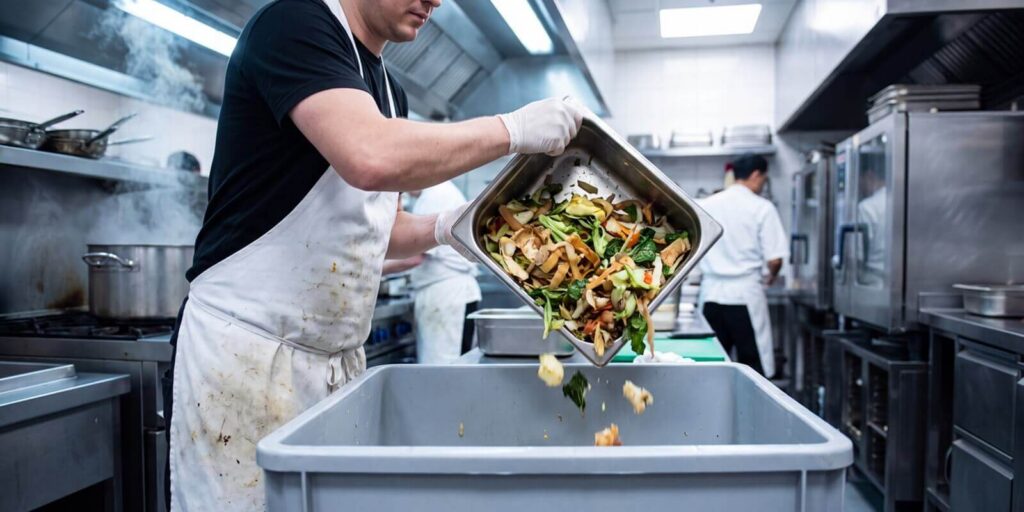
Food scraps, prep waste, and spoiled inventory add up fast in high-volume kitchens running multiple shifts. Left to sit, organic waste attracts pests and generates odor before a scheduled pickup even arrives.
Organic waste management food service programs work best when pickup frequency matches real output, not a fixed weekly schedule built for a lower-volume business. A full-service restaurant with heavy dinner rushes and a quick-service spot running steady volume all day call for different commercial waste management services entirely.
Health Code Waste Compliance: A Standard that Restaurant Owners Can’t Treat Casually
Health inspections don’t stop at food temperatures and handwashing stations. Waste storage, container condition, and disposal frequency all factor into the review. The FDA’s Food Code, the model most state and local health departments use to build their own retail food regulations, includes provisions for waste handling as part of a facility’s sanitation standards. In Maryland, the Office of Food Protection oversees how these standards apply locally and has been working toward aligning the state’s retail food code with the current federal model.
Poor waste practices can lead to:
- Health code violations on public inspection reports
- Pest activity that can trigger an immediate shutdown
- Odor and appearance issues that damage a restaurant’s reputation
- Fines or repeat citations if problems go uncorrected
The CDC notes that more than half of all foodborne illness outbreaks in the United States are linked to restaurants, delis, banquet facilities, schools, and other institutions, which is part of why sanitation, including waste handling, carries so much weight during an inspection. A skipped collection or a dumpster filled beyond capacity poses a serious compliance risk.
High-Volume Kitchen Waste Disposal Needs a Real Schedule
Restaurant waste pickup scheduling shouldn’t be a generic commercial account bolted onto a food service business. A kitchen running back-to-back shifts needs pickup timing built around its actual output, not a default route designed for a retail strip. Food service sanitation, waste management, and commercial waste management services generally work best when container size, pickup frequency, and grease servicing are set around a restaurant’s actual volume and hours, then adjusted as business changes.
Eagle Transfer Services: A Partner That Understands Food Service

At Eagle Transfer Services, we’ve spent more than four decades building service around the businesses we work with, and restaurants are no exception. We know a kitchen’s waste needs look different from a retail shop’s, and our commercial waste management services are built around that difference instead of asking a restaurant to fit a standard route.
We answer the phone with a real person, show up when we say we will, and follow through when something needs adjusting. If your restaurant needs a partner that takes reliability and sanitation as seriously as you do, contact us online or give us a call at (410) 983-3332 to talk through a service plan built around your kitchen.
About Us
Since 1979, Eagle Transfer Services has been the Mid-Atlantic's trusted partner for safe, responsible, and efficient waste management. Our commitment to dependable service and environmental responsibility hasn't changed in over 47 years — and it never will.
Learn more →I've been using this company for my business for years. They are always on time and professional. I highly recommend them for all your waste management needs!
These guys are great! They always go above and beyond to make sure my trash is taken care of. I would recommend them to anyone.