


A debris pile that starts as a few scraps by the door can become an Occupational Safety and Health Administration (OSHA) citation within days. Construction debris removal is the practical side of OSHA’s housekeeping standard, which requires keeping work areas, passageways, and stairs clear while a project is underway.
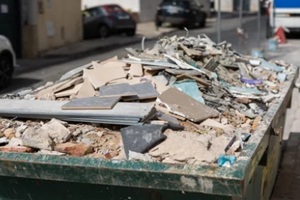
The rules also address how often combustible scrap must leave the site, when oily rags need covered containers, and when debris dropped from height needs an enclosed chute.
Unmanaged piles create hazards such as tripping and fires, and Maryland job sites follow MOSH, the state’s OSHA-approved program. Because OSHA standards set no fixed schedule, a regular hauling plan keeps a pile from becoming a citation and is a big part of your crew’s construction site safety.
What the OSHA Housekeeping Standard Requires Under 29 CFR 1926.25
Under OSHA’s housekeeping standard, keep form and scrap lumber with protruding nails, along with all other debris, clear of work areas, passageways, and stairs in and around buildings and structures. Regularly clear flammable waste materials and debris throughout the construction process, using a safe disposal method appropriate for the materials.
The standard also calls for containers that collect and separate waste, trash, and oily and used rags. Containers holding oily, flammable, or hazardous waste must have covers, and garbage and other waste must be removed at frequent, regular intervals.
The wording never sets several days, so a claim that OSHA requires daily or weekly removal goes beyond the text. Your hauling schedule is a site decision, and it needs to hold up when an inspector walks through.
Disposal Rules Under 29 CFR 1926.252
When debris falls through floor openings without a chute, barricades at least 42 inches high must surround the landing area and be positioned at least 6 feet from the opening’s projected edge. Warning signs must be displayed at every level. Separately, scrap, waste, and rubbish must leave the immediate work area as work progresses.
Oily Rags and Solvent Waste
Store flammable liquids, oily rags, and solvent waste in covered, fire-resistant containers and keep them there until they are removed from the worksite. Handle them separately from ordinary scrap through hazardous waste disposal rather than a general debris container.
How Debris Piles Become Trip, Fire, and Pest Hazards
A single pile can touch several rules at once. Scrap stacked on a stairwell landing, for example, conflicts with both the passageway language and the combustible scrap language. OSHA’s storage standard adds that aisles and passageways must stay clear for the safe movement of equipment and employees, and that storage areas must stay clear of accumulations that create tripping, fire, explosion, or pest hazards.
- Trip hazards form when a blocked passageway forces workers and equipment around the pile, leaving scrap lumber and protruding nails along the detour.
- Fire hazards grow as offcuts, sawdust, and packaging collect, especially near cutting, welding, or temporary heaters.
- Pest hazards start when debris sits long enough to give pests harborage, a condition 1926.250 names directly.
Maryland Jobsites and MOSH
Maryland Occupational Safety and Health (MOSH) covers Maryland employers with one or more employees and has adopted the federal construction standards in 29 CFR Part 1926. Maryland contractors therefore work under the same text covered above. When MOSH issues a citation, it must be posted at or near the place of the violation for three working days or until the condition is corrected, whichever is longer. Federal OSHA covers private-sector jobsites in Pennsylvania.
A safety lead can answer site-specific questions, and MOSH offers consultation services for the same purpose. This post summarizes the standards and is not legal or safety advice.
Setting a Hauling Schedule for Construction Site Cleanup
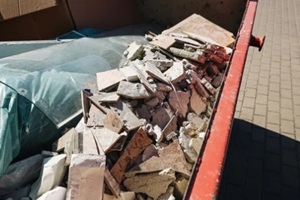
Hauling frequency should follow the work. Demolition and framing produce scrap faster than finish work, so pickups belong closer together in those phases and can space out later. A container placed near the work zone shortens the carry, keeps offcuts from collecting at stairs and doors, and keeps loads manageable by sorting wood, metal, drywall, and concrete as it goes in.
A construction debris removal service built around sorting and recurring pickups takes much of that load off the crew, and steady jobsite cleanup habits make each pickup go faster. Choose from 10-, 20-, 30-, or 40-yard roll-off containers to fit the scale of your project. In most cases, delivery happens within 24 to 48 hours of an order.
Keep Your Jobsite Clear With Eagle Transfer Services
At Eagle Transfer Services, we take pride in the pickup, and a real person answers when you call. Our team has served this region for 47 years and is glad to talk through container size and pickup frequency for your site. Call 410-983-3332 Monday through Friday between 6 a.m. and 4 p.m., or send a message through our contact page.
About Us
Since 1979, Eagle Transfer Services has been the Mid-Atlantic's trusted partner for safe, responsible, and efficient waste management. Our commitment to dependable service and environmental responsibility hasn't changed in over 47 years — and it never will.
Learn more →I've been using this company for my business for years. They are always on time and professional. I highly recommend them for all your waste management needs!
These guys are great! They always go above and beyond to make sure my trash is taken care of. I would recommend them to anyone.